
Like many dahlia growers, we have struggled to find the best way to store our tubers over winter. We live in zone 6b so technically we need to dig up the tubers every fall and store them inside. Unfortunately, we have had questionable success with inside storage. Dahlia tubers are stored best in temperatures between 40–45°F [1] and we do not have a place that consistently stays that temperature. Our garage is very well insulated, meaning dahlias stay too warm (often 50-65°F and above). This has caused our tubers to mold. Our shed, on the other hand, has no insulation at all so the tubers get too cold (between 5-30°F), which causes the tubers to rot. The hardier varieties have held on for us (I’m looking at you Cornel Bronze and Cailtyn’s Joy), but many of the tubers we have tried have not survived our winter (RIP Who Me, Camino Buzz, Pink Pom Pom etc). So enters the question… could we leave the tubers in the ground all winter with extra mulch and a tarp?
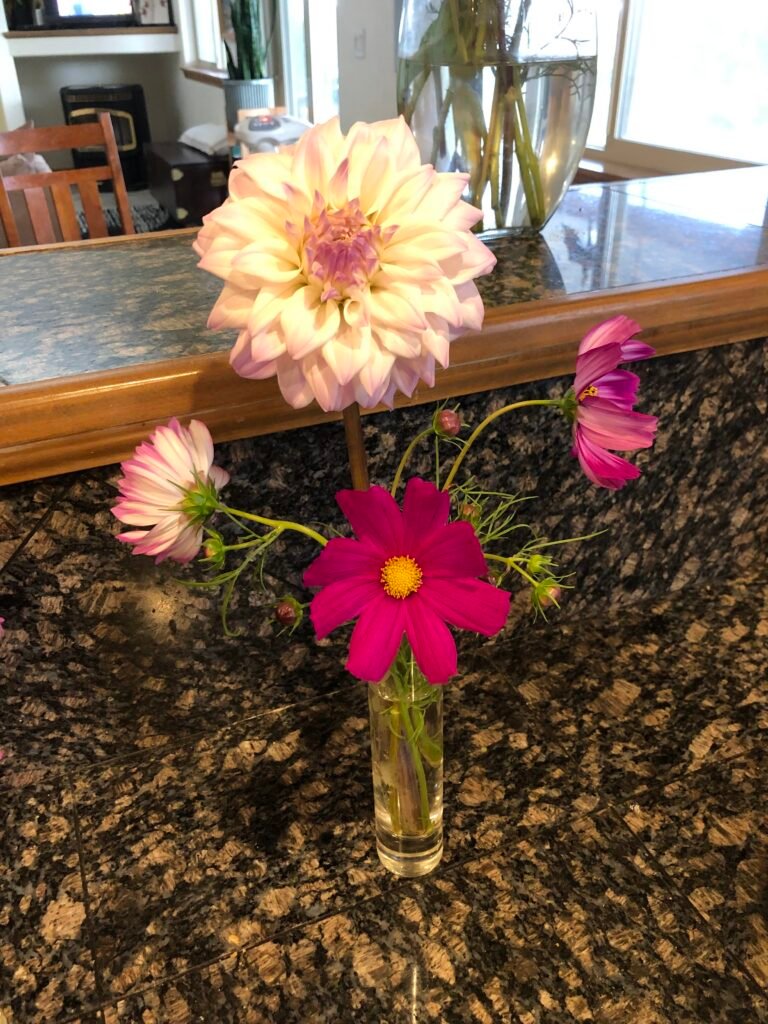
“Who Me” dahlia that was very prolific our first year, but who’s tubers did not survive the winter.

Cornel Bronze dahlia, year 4 on our flower farm and still going strong! This one is hardy! And prolific!
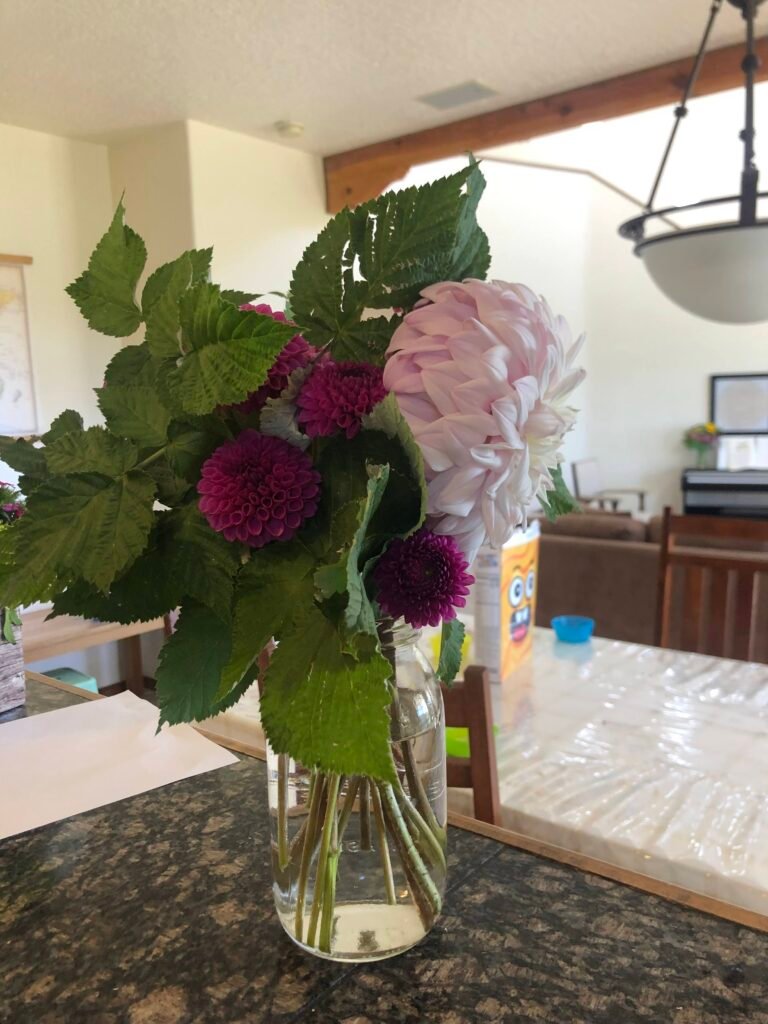
Who Me and Mystery Pink Pom that didn’t survive our first winter.
Test #1: 2024-2025
After the 2024 season we decided to trial not digging out tubers but leaving them in the ground. We covered with a layer of pine shavings and then a tarp (which I failed to document in photos) and waited until spring of 2025 to see the results. Surprisingly to us, about 99% of our tubers survived! The only ones that didn’t were ones not covered by the tarp. We dug up, divided, and replanted all in the spring. Wahoo it worked! It also made our spring even busier than normal, which was a definite trade off.
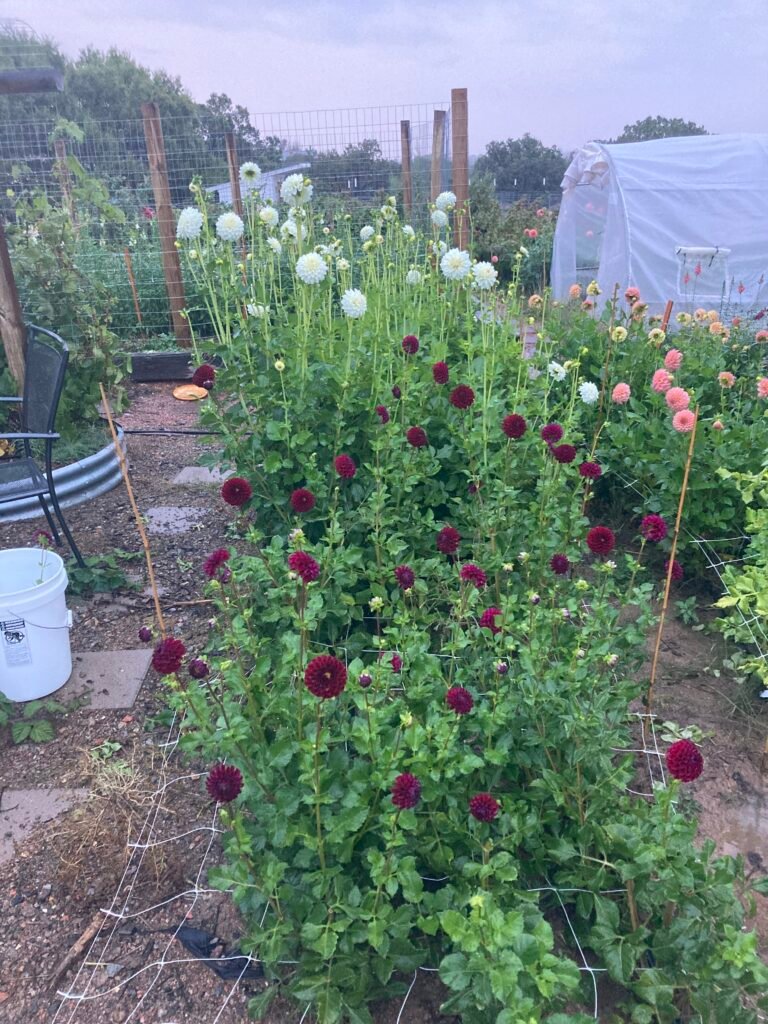
Chimancum Troy (purple), Boom Boom White (white), and Rock Run Ashley (pink) dahlia patch
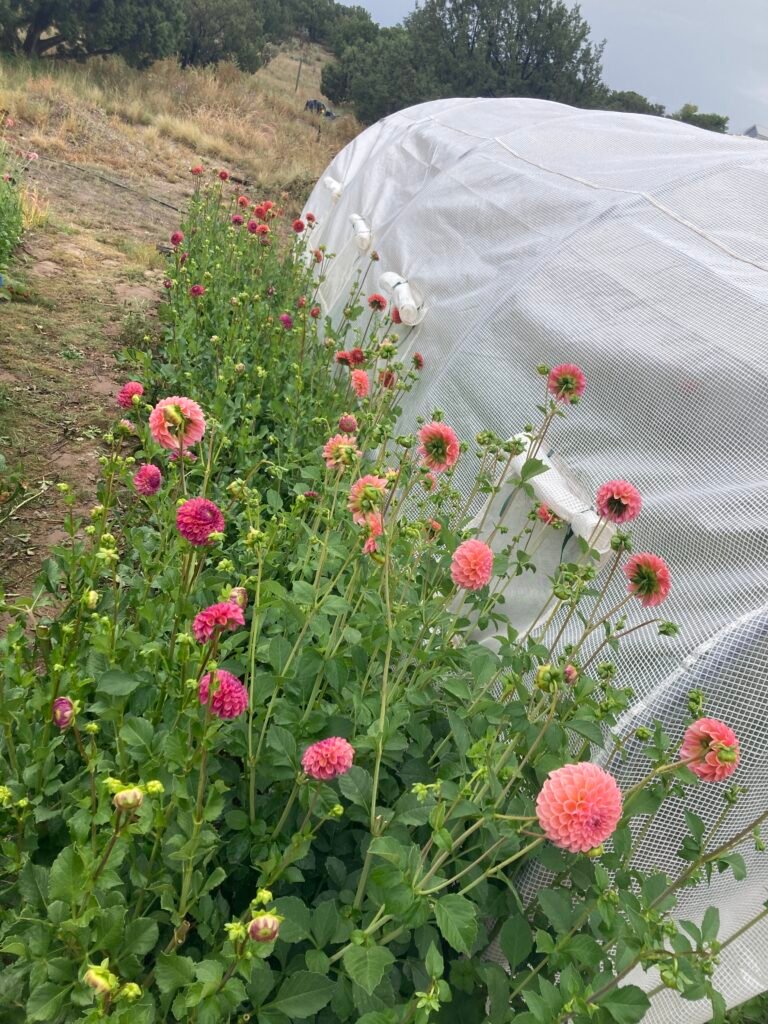
Linda’s Baby (peachy pink), Cailtyn’s Joy (mauve pink) , and Cornel Bronze (orange)
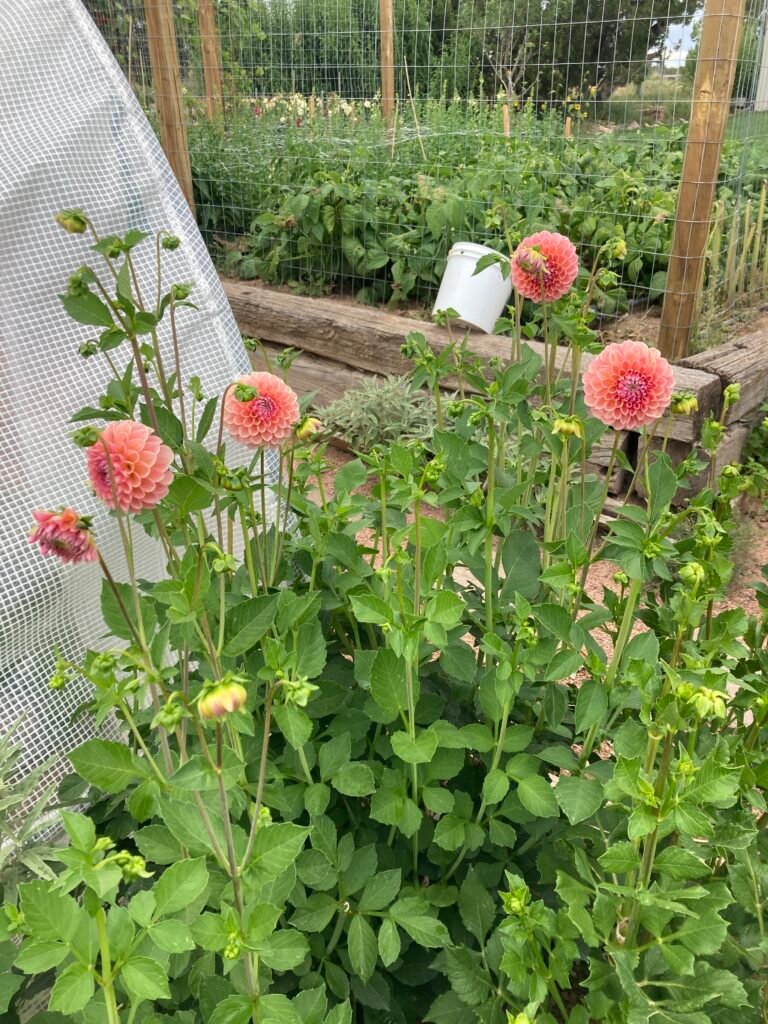
Linda’s Baby dahlias on full display
As the 2025 season came to a close we realized that unfortunately, we did not plant our tubers where we wanted them to stay for the 2026 season. We therefore had 3 options.
- Option 1: Dig up our dahlias as most in zone 6b do and try our luck as storage.
- Pros: Reduce work load in spring by dividing in the fall
- Cons: Remember our track record with winter storage? Not great!
- Option 2: Repeat the test of 2024. Leave the dahlias in the ground, cover them with mulch and tarps, and then dig up in spring to divide and replant in new location.
- Pros: It worked really well in 2024.
- Cons: Leaves a lot of work until spring which is already super busy.
- Option 3: Dig up in fall, divide, replant in new location, cover with mulch and tarps and wait for spring.
- Pros: Reduce work load in spring by dividing and planting in fall
- Cons: Uncertain whether it would work! We have never tried this before and we could loose all our tubers.
Test #2: 2025-2026
As you can probably guess, we picked Option 3 (with a caveat that we also did a small number of Option #1). We dug up our 200+ dahlias, divided them up, and planted them in new beds that we had prepped.
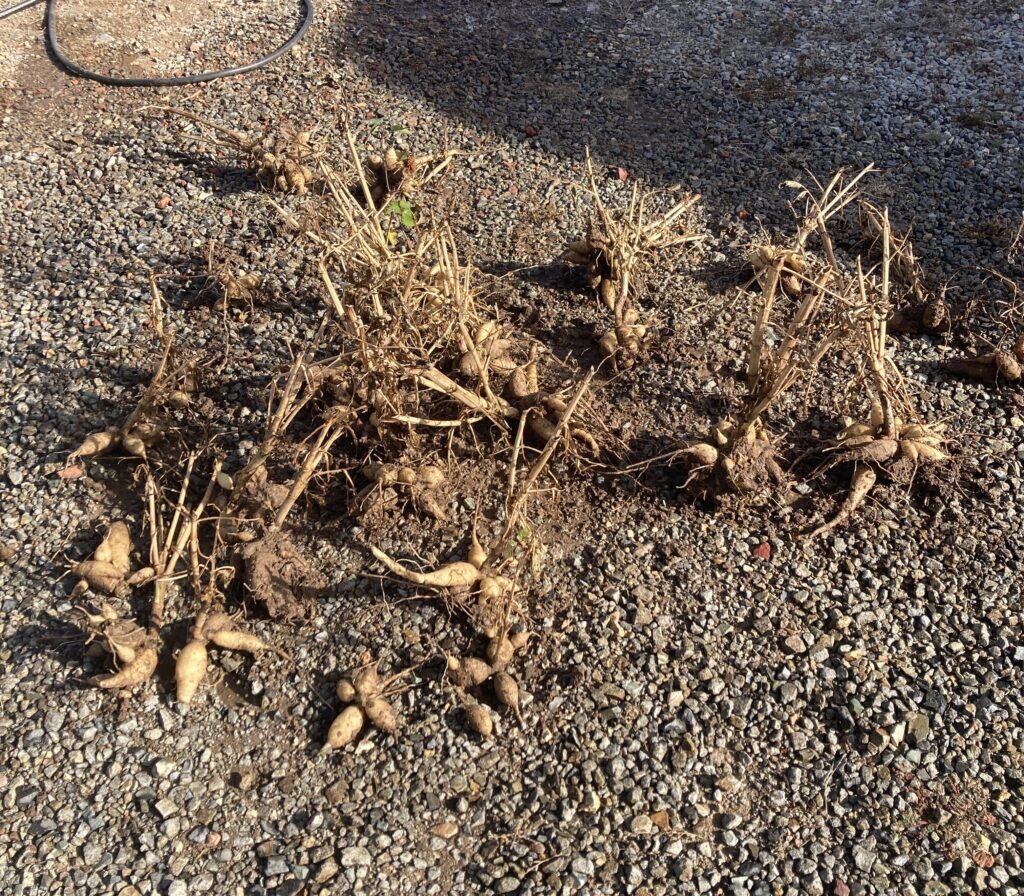
A few of our dahlias dug up and ready to divide.
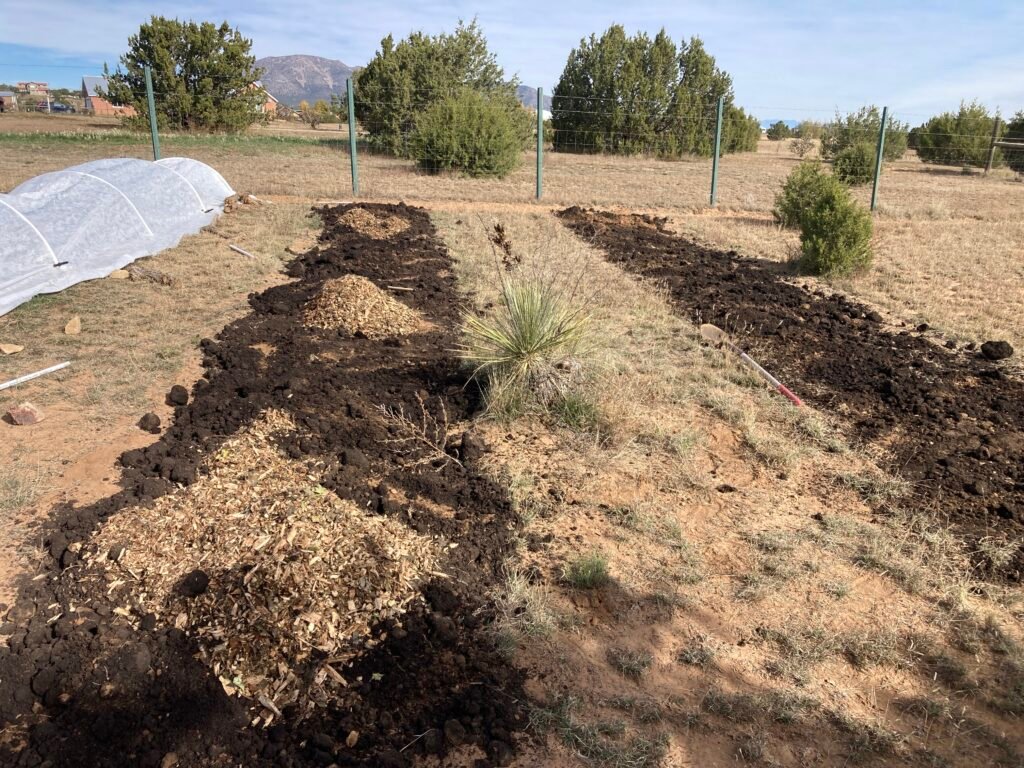
Prepping the row to plant with compost and wood chips as organic matter.
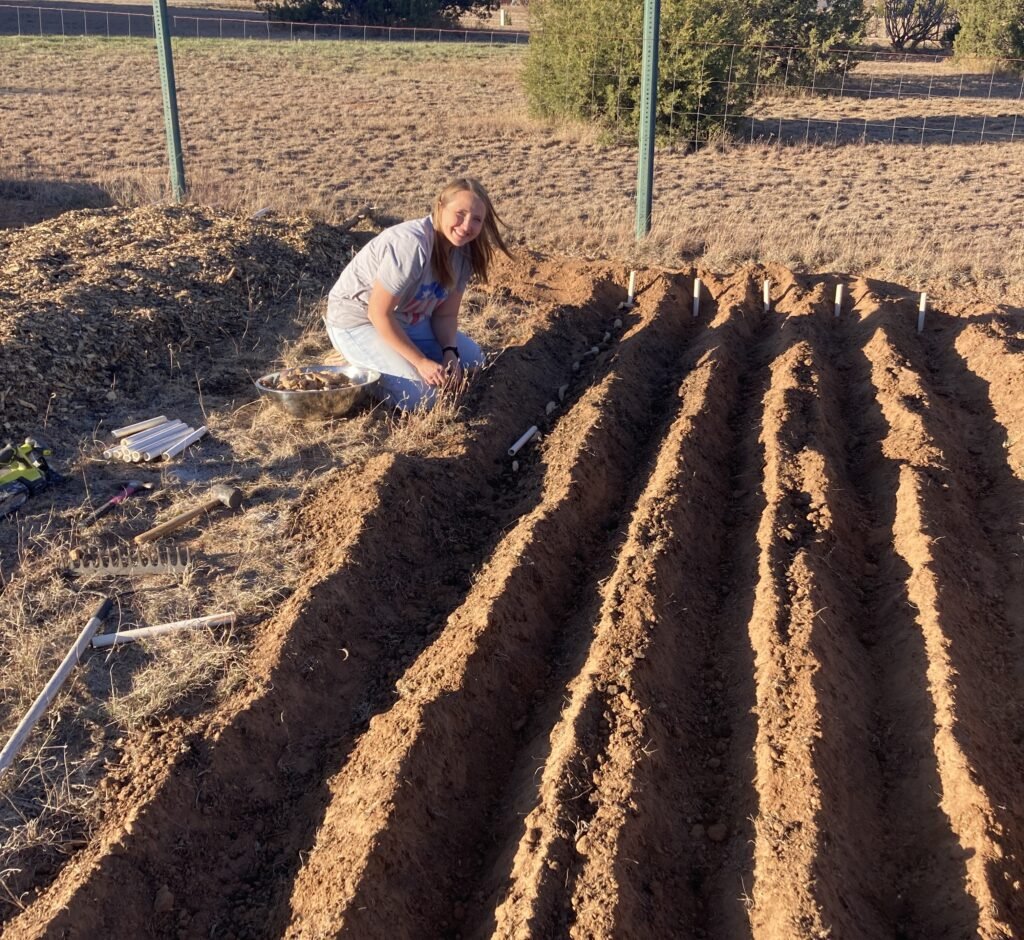
Planting tubers in rows.
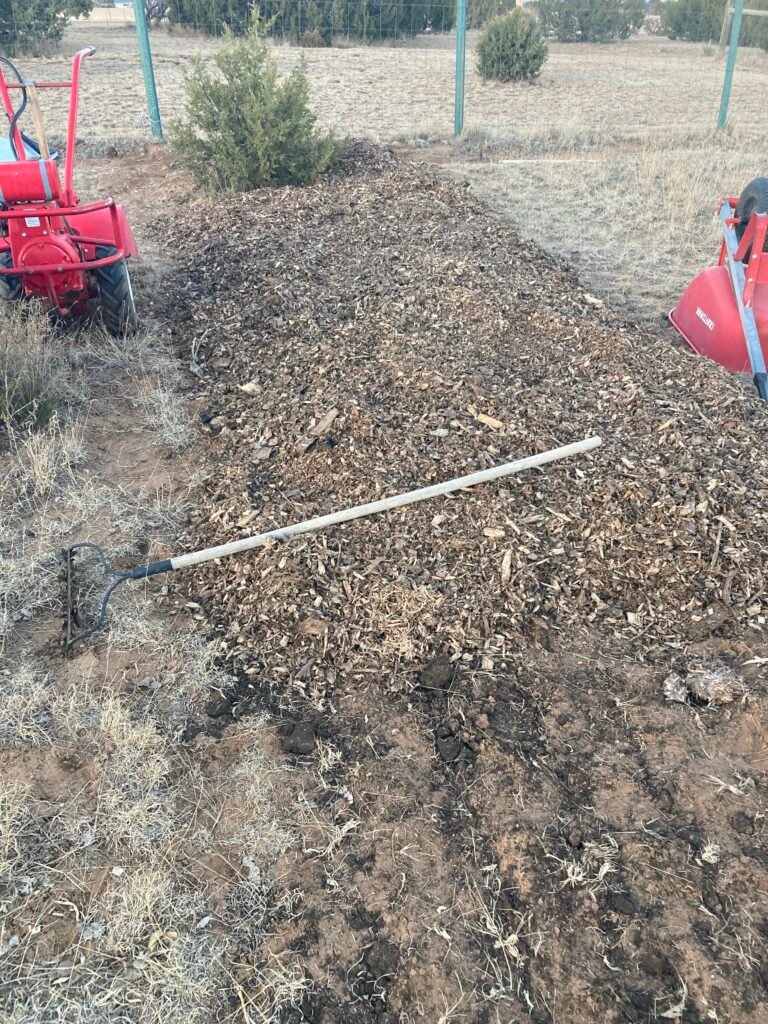
Covered with 10-12 inches of wood tree mulch which we got free from a local arborist.
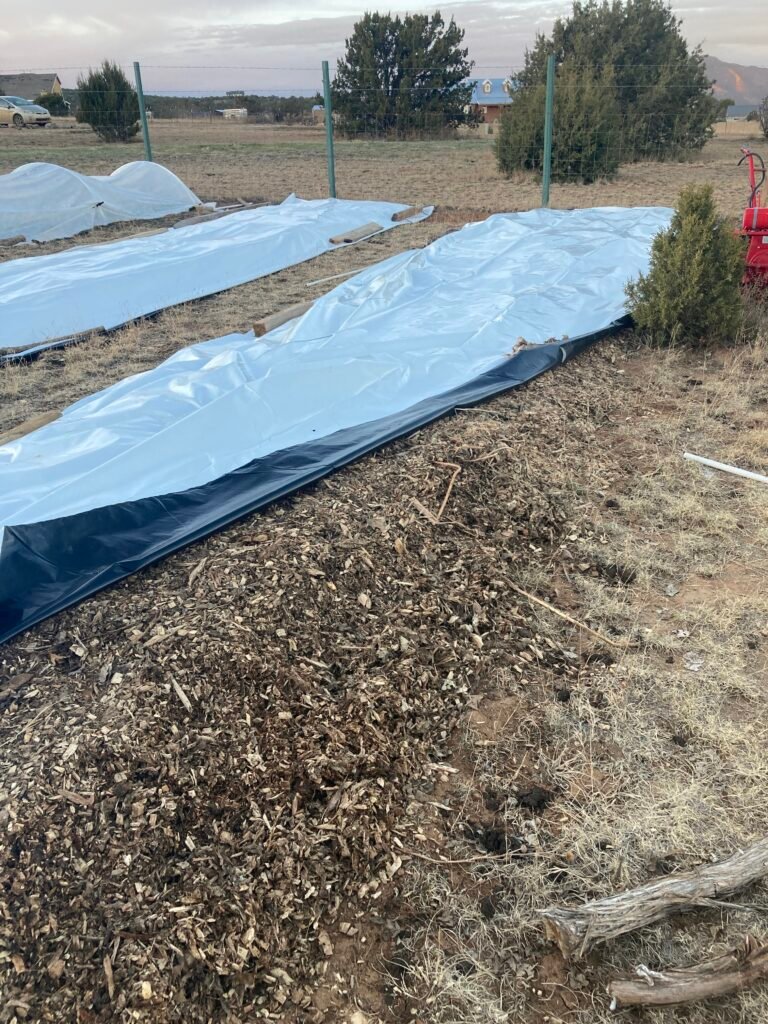
Covered the mulch with silage tarps we ordered from Farm Plastic Supply [2].
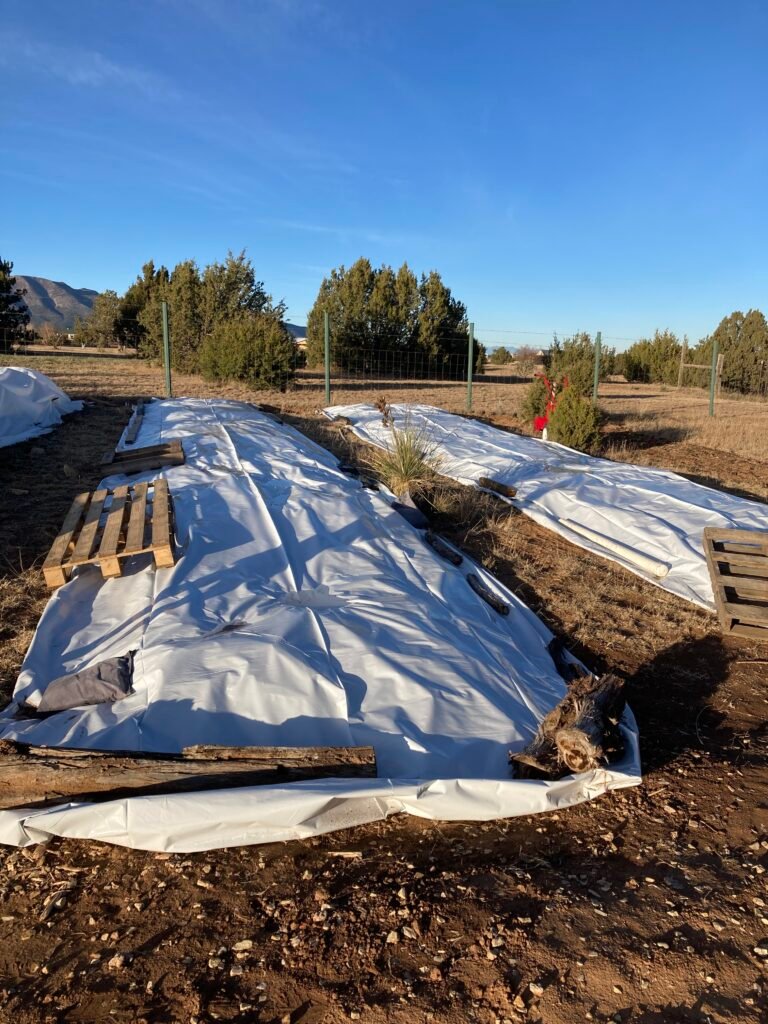
Weighed down the tarps to prevent them blowing away. We live in a very windy area and have had to fix this step many times.
Here is a video summarizing our 2025-2026 experiment!
As it is only February, it is still too soon to tell if our method is going to work this year, but we are hopeful! We did check on a few tubers in January and most were still looking strong, while a few were showing signs of molding. Only time will tell at this point!
Check back in the spring to see how our experiment turned out. If this works, we plan to not dig up at all after the 2026 season and just cover for winter. We will then only dig up and divide every 2-3 years. This could save us dozens of hours on the years we don’t have to divide, which will then increase ROI significantly. Can you tell that I really want this method to work??
References
[1] https://www.dahlia.org/docsinfo/articles/digging-dividing-and-storing-tubers/
[2] https://farmplasticsupply.com/ (Not an Otterly sponsor or affiliate)
Here hoping it works out! The flowers are beautiful!! I love your passion amd care of your flowers!!